Wednesday, November 20, 2013

Interrupting Chicken


http://www.davidezra.com/


Today I read 'Interrupting Chicken' by David Ezra Stein to the grade 1/2 classes.  They LOVED it! The depth of colour in the illustrations of the little red chicken's bedroom contrasted with pages of less colourful, more traditional looking fairy tale pages,  the endearing little chicken, the use of speech bubbles, and (of course) the interrupting, won them over immediately. Stein's little red chicken captures the impulsive young interrupter perfectly.  The group of 6 and 7 year olds were grinning right away when the father asked his little one not to interrupt the story right on the cover of the book. Asked what they thought might happen, the children immediately said "He is going to interrupt" with broad smiles. They could all relate. This is a fun read aloud for both the audience and the reader. Jumping in with the excited interruptions made my day. It would be a fun book to practice and read together as a reader's theater with your child reading the little red chicken's part. I have some writing ideas too: perhaps a little red chicken's "I will not interrupt" pledge - could be hilarious, or a version with spoilers for different fairy tales (what are your favourites), a book review or a trailer. When I 'Googled' for a cover photo, I found David Ezra Stein's webpage including this video of him talking about the book...


and this great book trailer (with a real chicken)...


 I was also reminded of one of Stein's other books that is a wonderful lesson about what a smile can do:


You can borrow both of these books from our school library.  Drop in and visit for more recommendations any Monday, Tuesday, Wednesday or Thursday after school. 

Tuesday, November 5, 2013

A New Pete the Cat - Fabulous!!

 
http://www.amazon.ca/Pete-Cat-Doll-James-Dean/dp/157982269X/ref=sr_1_5?s=books&ie=UTF8&qid=1383713731&sr=1-5&keywords=pete+the+cat

I have long been a fan of Pete the Cat.  I read Pete the Cat : I Love My White Shoes every year to the incoming kindergarten class than then place my Pete doll prominently on the classroom shelf to remind students that "it's all groovy" and there is no need to cry over little (or not so little) surprises. We read Pete the Cat and His Four Groovy Buttons as we begin to learn about subtraction (and remember that even if we lose something - "it's all cool"). The simple, brightly coloured illustrations combined with a handwritten style font appeal to readers young and old bringing the unassuming, cheerful, Pete the Cat to life.
http://www.amazon.ca/Pete-Cat-His-Magic-Sunglasses/dp/0062275569/ref=sr_1_fkmr1_1?s=books&ie=UTF8&qid=1383714227&sr=1-1-fkmr1&keywords=pete+the+cat+and+his+cool+glasses
Now Pete has returned to remind us that we have control over how we perceive the world and how our preceptions colour our day. Rather than rose coloured glasses, Pete gets a set of cool blue glasses from his friend Grumpy Toad.  Pete finds himself experiencing the cat 'blues' for the first time in his life and doesn't know what to do until he bumps into Grumpy Toad - who is NOT grumpy. The magic sunglasses are the key, helping each animal Pete meets along the way to "see things in a whole new way" - until the glasses break. Pete discovers that he doesn't need the glasses after all and that he has control over his own outlook. I can't wait to share this one with the class on one of our 'grumpy' days. Pete reminded me that sometimes I need to cross over to the sunny side of the street too!


Friday, November 1, 2013

Steve Jenkins - Author/illustrator/scientist

Two big boxes of non-fiction books purchased with the Raise-a-Reader grant funds from the Times Colonist arrived this month.  The students were so excited to see the new books on the shelves - and I had a great time doing book talks!
Product Details

Product Details
One of the highlights was a large set of Steve Jenkins books. Jenkins builds on the curiosity of children to create books like "What Do You Do with a Tail Like This?""Never Smile at a Monkey" and collections of the "est" of everything - "Biggest, Strongest, Fastest" and "Hottest, Coldest, Highest, Deepest".  The books sold themselves at multi-age book talks.  In fact, one class sat with me so long asking for the next and then the next page in "Actual Size" that they almost missed their book exchange time. The bright, bold colours, layers and textures of Jenkins' incredible collages bring the images to life and pull your eye from one side of the page to the other. The texts are based on questions asked by his children over the years as well as Jenkins' own wonderings and capture the reader's interest immediately. The questions the books pose, and answer, are perfect examples of inquiry in action.  This slide show from Jenkins' website gives and overview of his book making process. Jenkins narrates his illlustrating process on this video - fascinating!  His site includes a gallery of artwork created by students inspired by his books - hmmmm, art project in the future? Check out our whole Steve Jenkins collection on the school library catalog (just type in 'jenkins, steve' and press enter).


Tuesday, September 3, 2013

Happy New Year!

welcome+2010+%3D%29 


The day after Labour Day always seems more like New Year's Day to me than January first.  It is a time of new beginnings - new classes, new teachers, new projects, new books.... 


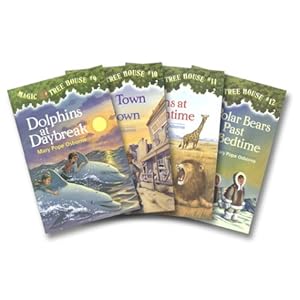
 This year began with the wonderful job of offering teachers new books for their classrooms from the selections left over after our very successful summer reading program last June.  Thanks to our wonderful parents and the PAC members who hosted our Scholastic Book Fair last fall, we had enough money to purchase three books for every student to read over the summer and have a few left to contribute to classrooms this fall. Students will be happy to have Jack and Annie greet them from the Magic Tree House, Junie B. share new adventures, Encyclopedia Brown and Horrible Harry tell it like it is, as well as new novels for intermediate students and picture books for the early primaries. Ahhhh, the joy of a shiny new book for the new year!!
 As well, the books purchased during our Donation Book Sale are waiting on the counter for me to catalog.  They should be circulating by next week. Thanks again to all the generous families who purchased books for our library! 
Reviews of some of our new books will be posted here later this month.


Saturday, December 1, 2012

The Delta is My Home


McLeod, T. & Willett, M. (2008). The Delta is My Home. Calgary, Alberta: Fitzhenry and Whiteside Co.
(Photographed by Tessa Macintosh)

This book is a collaborative effort by a grade 6 student (Tom Mcleod) and his teacher. Tom lives in Aklavik, Northwest Territories where he spends a lot of time on the land hunting and fishing with his family. The Delta is My Home tells about Tom's family and their life in Aklavik - his school, hunting trips, interviews with CBC radio, his Mom's wonderful bannock, and a big flood. Tom's father is a Renewable Resource Officer and Tom adds facts about wildlife behaviour and preservation to his stories.  Tom's stories are in one font while his teacher's comments are in another font. Through beautiful colour photographs of the landscape, wildlife and everyday life on each page and Tom's personal stories enhanced with added information from his teacher, this book really gives a sense of Tom's life in the north.

Intermediate, Teacher resource

World Book Encyclopedia 2012

Kobasa, P. (Ed.). (2012). The World Book Encylopedia.Chicago, IL.:World Book Inc.

This reference set consists of 22 volumes, 21 with alphabetical entries and one index. The index includes a 32 page section on "Writing, Speaking and Research Skills" which includes directions for writing reports, book reports and research papers (including tips on editing), tips for public speaking, and a research section which focuses on getting to know the library and assessing the reliability of sources.  This section, while it has some good pointers, is very text heavy with black and white line drawing illustrations of students. The introduction to the set states many articles are written at different grade levels depending on the curriculum/age appropriateness of the topic (eg. mouse is written at a primary level while cell uses more advanced vocabulary) and some articles progress from simpler to more complex language as the entry progresses. World Book editors also assert that they use current research into how children read maps to guide their map design.  Each entry includes cross references within World Book, a list of related articles/books and headings within the text to guide reading. I tried to look up a "wonder" question we had in kindergarten - "Do polar bears hibernate?" - and found the answer after looking up bears, then following the 'related articles' suggestions to polar bears and finally to hibernation.  This required using three different volumes.  Polar bears don't hibernate, by the way.  While students often love the feeling of holding a big, thick, heavy book, these books use small, consistent font, small photos (often colour) and graphs, tables and diagrams in subdued colours which are not engaging for young readers (or adults for that matter). Having to pull out several volumes rather than click a mouse to follow links is also cumbersome. While the information has strong authority, being chosen by expert editors, the editors do make decisions about what content is important (23 pages for horses and 4 pages for bears). A print encyclopedia is one way to find accurate information (I did answer my 'wonder' question) but it is not as engaging or convenient as many contemporary non-fiction print or online options.

Intermediate, Young Adult, Teacher resource
(Although the editors argue World Book is for 'all ages', it is not accessible for primary students without adult help.)

Pearson School Atlas

Pearson School Atlas book cover

Morrow, R. (2004). Pearson School Atlas. Toronto, Ont.: Pearson Education Canada.

 This is one of the few atlases in our library. Although it is dated, it does include Nunavut and still has many useful features. The graphics are colourful and include charts, graphs, photos, satellite photos, topographic maps and even road maps.  While this is a world atlas, there is a definite concentration on Canadian information making it useful for social studies curriculum. The variety of types of maps included also make it useful for teaching mapping and how to read various types of maps, graphs and diagrams.  Using it with the document camera would make a great group lesson. Information on geology, biomes, industry (including forestry) and some historical facts about the growth of Canada also have great curriculum connections. Some of the statistics are outdated, however, and a lesson in accessing current information on the web would be an appropriate compliment to this atlas.

Late Primary (with support), Intermediate, Teacher resource